When a commercial roof starts leaking, aging, or costing too much to maintain, the first assumption is usually replacement.
That may be the right call in some cases. But not always.
Many commercial roofs still have years of useful life left, even when they show signs of wear. If the roof is structurally sound and the underlying system has not failed, restoration may be a smarter, less disruptive, and more cost-effective option than a full tear-off.
The key is knowing the difference between a roof that needs to be replaced and a roof that can be restored.
The Short Answer
Roof restoration is the process of repairing, reinforcing, and coating an existing commercial roof to extend its service life. Roof replacement involves removing the existing roof system and installing a new one.
In general, restoration makes sense when the roof is still structurally sound, moisture damage is limited, and the existing substrate can support a fluid-applied roofing system. Replacement is usually necessary when the roof has widespread saturation, structural damage, major deck issues, or multiple failed roof layers.
A professional roof evaluation is the only way to know for sure, but understanding the basics can help building owners and facility managers make a better decision before committing to a major roofing project.
What Is Commercial Roof Restoration?
Commercial roof restoration is designed to bring an existing roof system back to a watertight, serviceable condition without removing and replacing the entire roof.
The process typically includes:
- Cleaning and preparing the existing roof surface
- Repairing seams, cracks, penetrations, fasteners, flashings, and problem areas
- Replacing damaged or saturated sections where needed
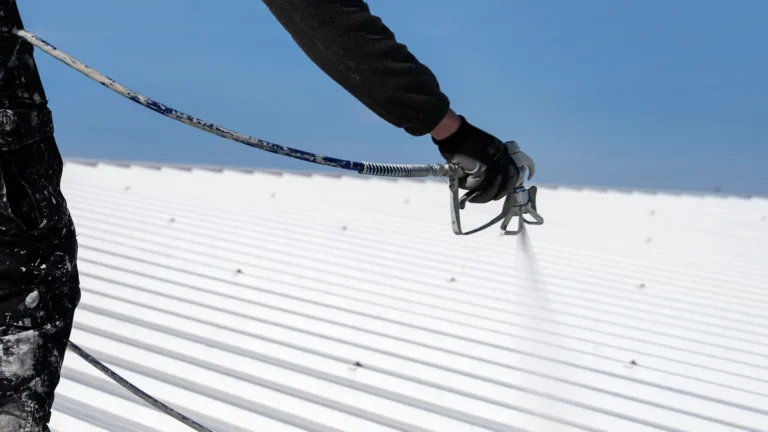
- Applying primers, base coats, reinforcement, and topcoats based on the roof type
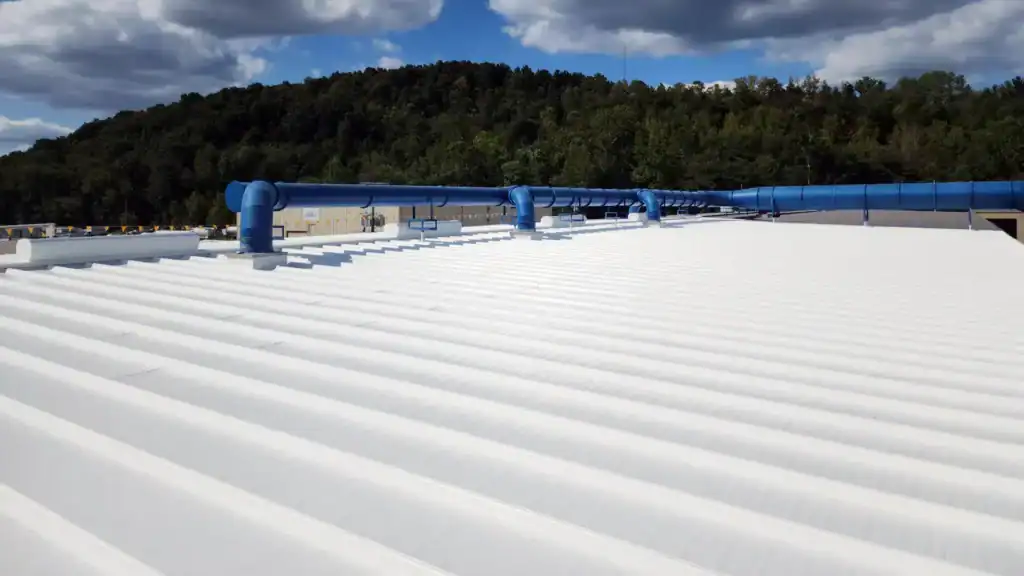
- Creating a seamless, fully adhered membrane over the existing roof
Restoration is commonly used on metal roofs, modified bitumen, built-up roofing, single-ply membranes, spray polyurethane foam, and structural concrete when the existing roof is a good candidate.
The biggest advantage is that restoration works with the roof you already have. Instead of tearing everything off and starting over, the goal is to correct existing issues, stop leaks, improve performance, and extend the roof’s usable life.
What Is Commercial Roof Replacement?
Commercial roof replacement is a more involved process. It usually means removing the existing roof system down to the deck or approved substrate and installing a new roof assembly.
Replacement may include:
- Tearing off the old membrane or roof system
- Removing wet or damaged insulation
- Inspecting and repairing the roof deck
- Installing new insulation, cover board, membrane, flashings, and details
- Disposing of removed roofing materials
Replacement is sometimes unavoidable. If the roof has widespread moisture intrusion, trapped water, severe deterioration, structural damage, or too many existing roof layers, restoration may only delay a bigger problem.
A replacement gives the building a new roofing system from the deck up, but it usually comes with more cost, more labor, more waste, and more disruption.
Roof Restoration vs. Replacement: Main Differences
| Category | Roof Restoration | Roof Replacement |
|---|---|---|
| Scope | Repairs and restores the existing roof | Removes and replaces the roof system |
| Cost | Usually lower than replacement | Usually higher due to tear-off, labor, and disposal |
| Disruption | Minimal disruption to building operations | More noise, debris, staging, and downtime |
| Timeline | Often faster to complete | Typically longer and more labor-intensive |
| Waste | Less material sent to landfill | More tear-off waste and disposal |
| Best For | Structurally sound roofs with repairable issues | Severely damaged, saturated, or failed roofs |
| Long-Term Value | Extends service life and can delay replacement | Provides a new roof system when restoration is no longer viable |
When Roof Restoration Makes Sense
Roof restoration is worth considering when the existing roof has problems, but has not completely failed.
Good candidates usually have:
- Active leaks in isolated or repairable areas
- Aging surface conditions
- Minor membrane deterioration
- Open seams or fastener issues
- Surface cracks or weathering
- Ponding water concerns that can be addressed with the right system
- A sound roof deck
- Limited saturated insulation
- Good adhesion potential for coatings or restoration materials
In these cases, restoration can solve the immediate problem while helping the building owner avoid the cost and disruption of replacement.
Restoration can also be a strong option when the goal is to improve waterproofing, reduce maintenance, increase reflectivity, or extend the roof’s service life before replacement becomes necessary.
When Roof Replacement Is the Better Option
Restoration is not a magic fix for every roof. There are times when replacement is the correct decision.
Replacement is usually the better choice when the roof has:
- Widespread trapped moisture
- Significant wet insulation
- Structural deck damage
- Major membrane failure
- Severe deterioration across large areas
- Multiple roof layers that exceed code or system requirements
- Poor drainage that cannot be corrected
- Unsafe or unstable roof conditions
- Previous repairs that have failed repeatedly
If the existing roof system is too compromised, coating over it will not solve the underlying issue. In fact, restoring a roof that should be replaced can waste money and create bigger problems later.
That is why moisture testing, adhesion testing, core samples, and a detailed inspection are so important. The goal is not to force restoration or replacement. The goal is to choose the solution that actually fits the roof.
Cost: Is Roof Restoration Cheaper Than Replacement?
In many cases, yes. Roof restoration is typically less expensive than full replacement because it avoids much of the tear-off, disposal, and reconstruction involved in replacing a roof.
The savings can be significant, especially on large commercial buildings.
But cost should not be the only factor. A cheap solution is not a good solution if it fails early. The better question is:
What option gives this building the best long-term value?
If the roof is a good candidate, restoration can extend service life at a lower upfront cost. If the roof is too far gone, replacement may be more expensive upfront but more responsible over the long term.
A proper roof evaluation should compare both immediate cost and lifecycle cost.
Disruption: Why Restoration Is Often Easier on Building Operations
For many commercial buildings, the disruption of roof replacement is just as concerning as the cost.
A full replacement can involve tear-off crews, dumpsters, noise, debris, material staging, odors, and temporary exposure to weather. For active facilities, that can interfere with employees, tenants, customers, inventory, equipment, or production schedules.
Restoration is generally less invasive. Since most of the existing roof remains in place, the project can often be completed with less noise, less debris, and fewer interruptions to daily operations.
That matters for:
- Manufacturing facilities
- Warehouses
- Retail centers
- Schools
- Healthcare facilities
- Office buildings
- Multi-location properties
- Buildings with sensitive equipment or inventory
For facility managers, minimizing disruption is not a small benefit. It can be one of the main reasons restoration is considered in the first place.
Sustainability: Restoration Helps Reduce Roofing Waste
Roof replacement can send a large amount of roofing material to the landfill. On a commercial building, that can include membrane, insulation, fasteners, flashings, and other tear-off debris.
Restoration reduces waste by reusing the existing roof assembly when it is still viable. Instead of removing the entire system, damaged areas are repaired and the roof is upgraded with a fluid-applied restoration system.
That makes restoration a more sustainable option when the roof qualifies.
Reflective roof coatings can also help reduce rooftop heat gain by reflecting more sunlight and absorbing less heat than darker roof surfaces. The EPA notes that cool roofs absorb and transfer less heat to the building than conventional roofs, and the Lawrence Berkeley National Laboratory has reported that white commercial roofs can produce energy savings in warm climates, depending on building type, location, and utility costs.
Energy Performance: The Role of Reflective Roof Coatings
Many commercial roof restoration systems use highly reflective topcoats, especially white silicone, acrylic, or urethane coatings.
These coatings can help lower roof surface temperatures and reduce heat transfer into the building. That may improve comfort and help reduce cooling demand, especially in hot, sunny climates.
This does not mean every building will see the same energy savings. Results depend on climate, insulation, HVAC efficiency, roof condition, building use, and energy rates.
But for the right building, improved reflectivity can be a valuable added benefit of restoration.
Warranty Considerations
Both roof restoration and replacement may qualify for warranty coverage, depending on the system, materials, contractor, installation quality, and inspection requirements.
A restoration warranty is not just about applying a coating. The roof must be properly evaluated, prepared, repaired, and installed according to system specifications.
That includes details like:
- Proper surface cleaning
- Correct primer use
- Seam and flashing reinforcement
- Required application rates
- Proper dry film thickness
- Approved topcoat selection
- Final inspection and documentation
A roof restoration system is only as good as the evaluation, preparation, and installation behind it.
How to Decide: Restore or Replace?
The best decision starts with a roof assessment.
A qualified roofing professional should evaluate:
- Current roof age and condition
- Leak history
- Moisture levels
- Drainage
- Deck condition
- Existing roof layers
- Membrane type
- Adhesion potential
- Flashings, seams, penetrations, and details
- Building use and operational needs
- Budget and long-term facility plans
From there, the recommendation should be straightforward:
If the roof is sound, restoration may extend its service life and help avoid premature replacement.
If the roof is saturated, unstable, or beyond repair, replacement is likely the better investment.
Common Misconceptions About Roof Restoration
“Restoration is just a coating.”
Not true. A proper restoration system includes evaluation, repairs, surface preparation, detailing, reinforcement, and coating. The coating is one part of the system, not the entire solution.
“If a roof leaks, it has to be replaced.”
Not always. Many leaking roofs can be restored if the damage is isolated and the underlying roof is still sound.
“Replacement always lasts longer.”
Replacement may be necessary in severe cases, but restoration can provide strong long-term performance when installed over the right roof. The better option depends on the roof’s actual condition.
“Restoration is only a temporary patch.”
A properly installed restoration system is not the same as a patch. It is designed to extend roof life, improve waterproofing, and provide a seamless protective membrane.
Final Takeaway
Roof restoration and roof replacement both have their place.
Replacement is the right choice when the existing roof has failed beyond repair. But if the roof is structurally sound, restoration may offer a better path forward: lower cost, less disruption, reduced waste, improved waterproofing, and extended service life.
The important thing is not to guess.
Before committing to a full roof replacement, have the roof evaluated by a qualified professional. You may find that restoration can solve the problem without tearing everything off.
Need Help Evaluating Your Commercial Roof?
American WeatherStar works with commercial roofing professionals and building owners to determine whether a roof is a good candidate for restoration. Our fluid-applied roof restoration systems are designed to stop leaks, extend service life, and reduce the cost and disruption of full replacement when the existing roof qualifies.
Schedule a roof evaluation to find out whether restoration or replacement is the right move for your building.
FAQs
Is roof restoration better than roof replacement?
Roof restoration is better when the existing roof is structurally sound and the main issues can be repaired. Replacement is better when the roof has widespread moisture, structural damage, or system failure.
How long does a restored commercial roof last?
The service life of a restored roof depends on the system used, roof condition, coating thickness, maintenance, climate, and installation quality. Many restoration systems are designed to add years of service life when properly installed and maintained.
Can a leaking commercial roof be restored?
Yes, in many cases. If the leaks are caused by repairable issues such as open seams, failed flashings, fastener problems, or surface deterioration, restoration may be a good option. If leaks are caused by widespread saturation or structural damage, replacement may be necessary.
Is roof restoration just applying a coating?
No. Proper restoration includes inspection, cleaning, repairs, detailing, reinforcement, and coating. The goal is to create a seamless, watertight membrane over a properly prepared roof surface.
What types of commercial roofs can be restored?
Common candidates include metal roofs, modified bitumen, built-up roofing, single-ply membranes, spray polyurethane foam, and structural concrete. The roof must be evaluated to confirm adhesion, moisture levels, and overall condition.
How do I know if my roof needs replacement instead of restoration?
A roof may need replacement if it has widespread wet insulation, structural deck damage, severe deterioration, too many existing roof layers, or repeated failures that cannot be corrected through repair and restoration.
Does roof restoration reduce energy costs?
It can, depending on the roof system, building, climate, insulation, and energy use. Reflective roof coatings can reduce rooftop heat absorption, which may lower cooling demand in warm climates. The EPA identifies high solar reflectance and thermal emittance as key characteristics of cool roofs.